
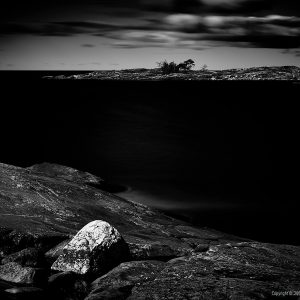
The world is going to pieces and people like [Ansel] Adams and [Edward] Weston are photographing rocks!
Henri Cartier-Bresson
You know why the beetles and buttercups so please you?
It is because you do not know the human soul, you do not see the stars!
Friedrich Hebbel
There is no denying: we humans love drama. Every nature documentary needs some of it. Will the young duckling survive? Will the antelope escape the lions? Mostly, however, we love drama involving ourselves. That might be a reason why artists, filmmakers and writers have and still do produce so much works about war. War as the ultimate human drama. Both quotes above were written at times of war. The Cartier-Bresson quote is from the time of WWII and Hebbel wrote at the dawn of the German Revolution of 1848.
Both quotes also sharply criticize artists that in such times of human drama do not pick up on this drama but continue to make nature the theme of their work. To me the criticism seems to be that such nature-artists don’t get their priorities straight. Is this right? Is there an implicit supremacy of human affairs over nature? There is an answer to that.
Hebbels text was directed against the Austrian writer Adalbert Stifter, about whom I wrote in the last post. In 1852, then, Stifter gave an answer in the preface to a collection of his novellas. There he wrote: “The breeze in the air, the murmur of water, the growth of corn, the waves of the sea, the wonder of spring, the shimmer of the sky, the glimmer of the stars – these I consider awesome. The majestic thunderstorm, the lightning that splits houses, the storm driving the flood, the volcano, the earthquake that shatters countries I do not consider greater than the above; instead I consider them less awesome as they are only the results of higher laws.”
These “higher laws”, Stifter called the Gentle Law. In 1841 John Phillips had published the first global geologic time scale. In 1852, when Stifter wrote his text, Darwin had formulated but not yet published his theory on evolution through natural selection. We humans started to realize that nature is organized as evolving systems of systems – and humans are but a speck of dust in that.
Stifter continues to say that humankind in its infancy only admired the strong, the violent, the heroic and the ones able to suppress others. But, he continues, when humankind matured it recognized the moral laws and the rule of law as foundation for human societies. It is by love, respect for the other and peaceful cooperation that humans individually and as societies thrive. Gentleness rules, one could say.
If we accept this as a “law” or rather a program, an aspiration or wishful thinking I always found this a refreshing view. In history lessons we still seem to talk more about wars and revolutions and less about achievements in agriculture and our efforts to co-exist peacefully. Stifter’s view, that we shouldn’t so much fetishize drama and more focus on the epic of the big picture, the slow evolution of nature and culture seems to me worth considering. Stifter implicitly also reminds us that we can learn from nature also for our own lives and societies, not by looking at volcano eruptions but by watching the gentle turn of the seasons.
This is something, that has deeply ingrained itself into my mind: observing nature teaches us about the forces that also guide us. This conviction has made me a nature and landscape photographer.
Every time I open a newspaper I easily get convinced that the world is going to pieces. But shall we let insanity win? I think remembering Stifter’s Gentle Law can help us both staying sane and getting our priorities right.
Oh how I wish we would more often look at rocks and less often throw them.